Reconstructing rehab: Empowering understanding
In the world of rehabilitation, effective communication is paramount. As OTAs and PTAs, we know that complex medical language can hinder progress. This page guides you through reconstructing your rehabilitation forms, information sheets, and exercise regimes to enhance health literacy, ensuring your clients fully grasp and engage with their care.

PART 1 — ORIGINAL DOCUMENT
Nova Scotia Health – General Leg Exercise Program (2025).
Click the button below to connect to the original document.

PART 2 — RECONSTRUCTED DOCUMENT
Easy-to-Read Leg Exercise Guide
For people recovering from surgery, injury, or illness
what we changed
-
Used bullet points instead of long paragraphs
-
Added purpose statements explaining why each exercise matters
-
Included clear frequency and repetition instructions using numbers and bold text
-
Added safety warnings in plain language and highlighted stopping cues
-
Included visual cues and icons to support understanding
-
Improved layout with white space and consistent formatting
-
Designed content to be culturally neutral and easily translatable
-
Avoided medical jargon and replaced with functional terms (e.g., “get stronger,” “walk safely”)
- Changes were made from the original to simplify the routine
Why am I doing these exercises?
These exercises help you:
- Make your legs stronger
- Keep your joints moving
- Improve blood flow
- Walk and move more safely

Do your exercises every day.
Ask questions anytime. We are here to help you.
How often should I do these?
Do each exercise:
10 times
1–2 times per day
Slow and controlled
If something hurts more than mild discomfort, stop and tell your therapist.
Important Safety Rules (If You've Had Hip Surgery)
Do NOT twist your hips
Do NOT cross your legs
Do NOT bend your hip more than a right angle (like sitting too low)
If unsure, ask before doing the exercise.
Seated Exercises (sit tall in a stable chair)
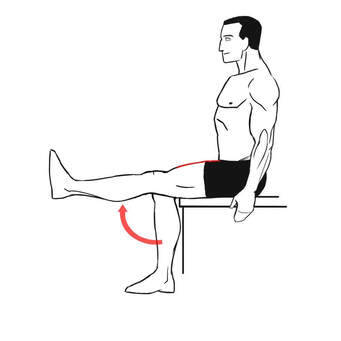
1. Leg lifts (Quad Set)
- Sit tall
- Straighten one leg
- Tighten the front thigh
leg lifts
-
Hold 5 seconds
- Relax
- Do 10 times
https://www.optimumep.com.au/blog/the-best-4-exercises-for-knee-osteoarthritis
2. Knee Lift
What this helps: Hip and knee movement
Steps:
- Sit up tall
- Lift one knee toward your chest
- Hold for 5 seconds
- Lower slowly
Do: 10 times on each leg
https://workoutlabs.com/exercise-guide/seated-knee-lifts-elevations/

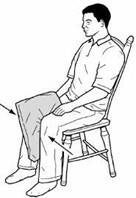
3. Knee Squeezes (with pillow)
What this helps: Inside thigh muscles
Steps:
- Sit tall with a towel or pillow between your knees
- Squeeze your knees together
- Hold for 5 seconds
- Relax
Do: 10 times
https://orthonc.com/uploads/pdf/Hip_Knee_AROM_Sitting.pd
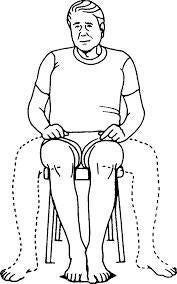
4. Open and Closed Leg Exercises
What this helps: Outside hip muscles
Steps:
- Sit tall
- Move your legs apart
- Bring them back together
Do: 10 times
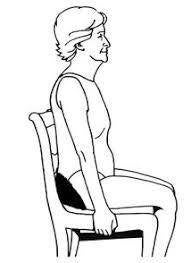
5. Buttock Squeezes (Butt Clenches)
What this helps: Buttock muscles
Steps:
- Sit tall
- Squeeze your buttocks together
- Hold for 5 seconds
- Relax
Do: 10 times
https://www.nshealth.ca/sites/default/files/documents/1597-2025.09.23.pdf
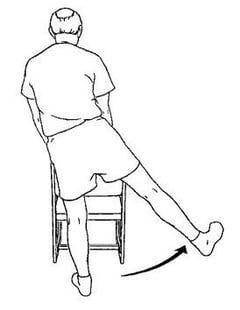
6. Standing Exercise
Hold counter to do these exercises or a sturdy chair
side leg lift exercises
What this helps: Side hip muscles
Steps:
- Stand tall holding support
- Lift one leg out to the side
- Hold for 5 seconds
- Lower slowly
Do: 10 times on each leg
https://kr.pinterest.com/pin/506936501827331787/
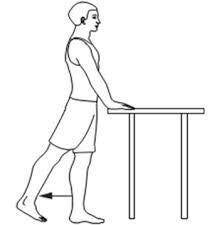
7. Back Leg lift
What this helps: Buttock muscles
Steps:
- Stand tall holding support
- Lift one leg straight back
- Hold for 5 seconds
- Lower slowly
Do: 10 times on each leg
https://myhealth.alberta.ca/Health/Pages/conditions.aspx?hwid=custom.ab_hipreplacement_phase1_exercise_inst
-
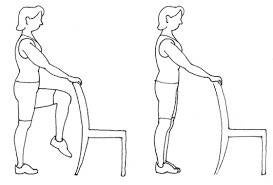
Marching on The Spot
What this helps: Balance and hip strength
Steps:
- Stand tall holding a chair or counter
- Lift one knee up
- Hold for 5 seconds
- Lower slowly
- Do: 10 times on each leg
https://www.royalberkshire.nhs.uk/media/vxfp0q5m/standing-lower-limb-exercises_nov23.pdf
-
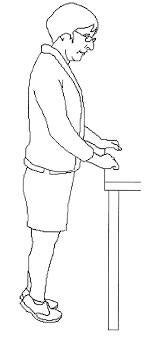
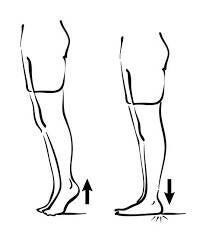
Heel Raises
Why it helps: Strengthens calves, improves balance, and boosts circulation.
Stand at counter or sturdy chair
Stand on your toes.
- Hold for 5 seconds
- then lower yourself down
. • Do: 10 times.
https://www.nshealth.ca/sites/default/files/documents/1597-2025.09.23.pdf
10. Knee Bends
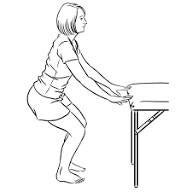
What this helps: Thigh and knee strength
Steps:
-
Stand with feet shoulder‑width apart
-
Bend knees slightly (small squat)
-
Hold for 5 seconds
-
Stand back up
Do: 10 times
https://www.royalberkshire.nhs.uk/media/gbcdl535/stage-2-exercises_mar23.pdf
-
Sit to Stand
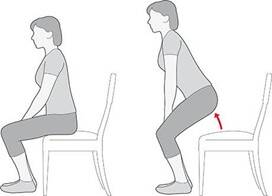
What this helps: Strength for getting up from a chair
Steps:
- Sit near the front of a chair
- Push through your legs to stand up
- Use your arms if needed
- Sit back down slowly
Do: 10 times
12. Sit to stand without hands
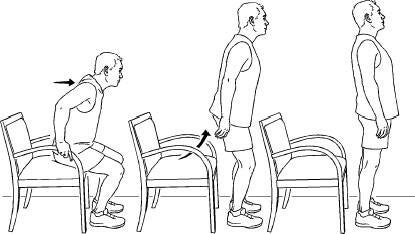
What this helps: Strength for getting up from a chair
Steps:
- Sit near the front of a chair
- Lean forward, look up, and then stand without using your hands
- Push through your legs to stand up
- Sit back down slowly
Create Your Own Website With Webador